


Vinho Verde is one of Portugal’s best-loved drinks, and a perennial favourite enjoyed year-round on sun-lit terrace bars and in fresh seafood restaurants. Translating as “green wine” (though this does not refer to its colour), Vinho Verde is renowned for its freshness, high acidity, and often a light effervescence that makes it feel almost like an Aperol or Campari Spritz.
But what exactly is Vinho Verde? How does it compare to other wines? And where should you try it in Lisbon?
What is Vinho Verde?
Vinho Verde is a DOC Portuguese wine, meaning it is recognised as unique to the territory in which it is produced and protected by the designation of origin(Denominação de Origem Controlada). Despite its nickname “green wine”, Vinho Verde is not green in colour. Instead, “green” refers to the wine’s youthful character as it is typically bottled and enjoyed within three to six months of the grapes being harvested, when flavours are at their most vibrant.
Where does it come from?
The Vinho Verde DOC is mostly located in the northern Minho region and its surrounding nine subregions (Amarante, Ave, Baião, Basto, Cávado, Lima, Monção e Melgaço, Paiva, and Sousa), close to the Atlantic coast. Geography plays a critical role in its production, which relies on a strong Atlantic climate. This means cooler temperatures, frequent rainfall, and ocean breezes, all of which help grapes keep their bright acidity and aromatic lift.

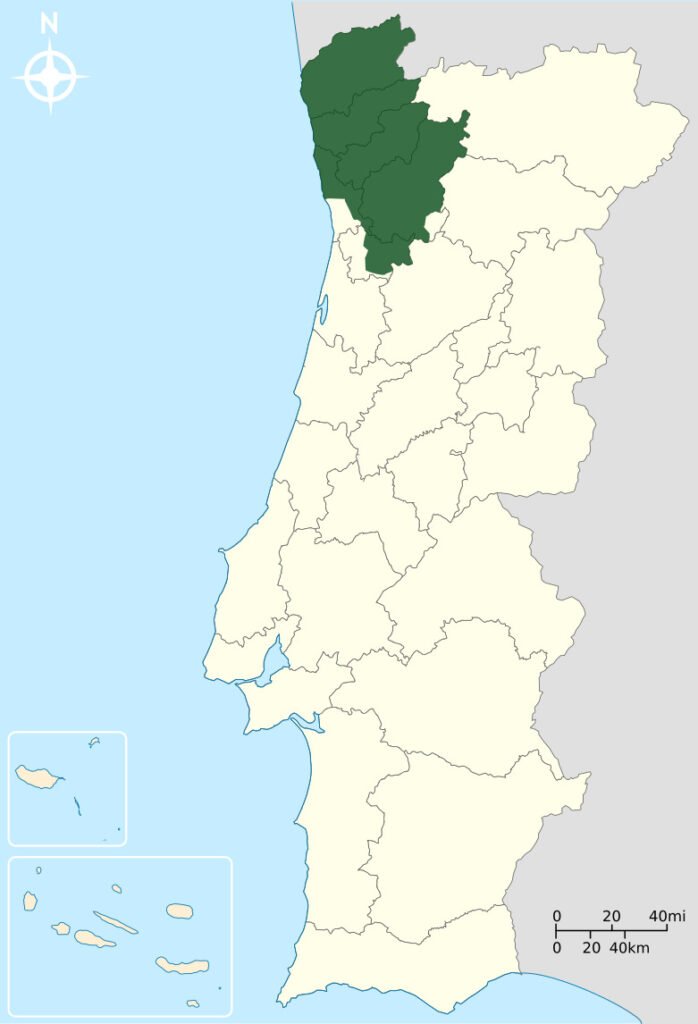
The cultivation of vinho verde grapes in Minho is fairly intense. As of 2014, there were around 19,000 small-scale growers, many of whom trained their vines high off the ground to allow the cultivation of vegetable crops on the ground below. You can usually see wine’s subregion of origin on the bottle’s label, such as Vinho Verde-Amarente or Vinho Verde-Monção e Melgaço.
What does Vinho Verde taste like
Vinho Verde is light-bodied, low in alcohol (9%–12% ABV),crisp, slightly sparkling, and refreshingly aromatic. Its taste profile varies taste profile includes lime and lemon zest, green apple and pear, white flowers, fresh herbs (ocassionally), and a gentle, mineral edge.
It’s also one of Portugal’s most food-friendly wines—especially when there’s seafood involved, making it the perfect pairing to many Portuguese classics.
Most Vinho Verde wine is white (about 85%), though there are also red and rosé varieties. The wine is almost always dry, though you’ll occasionally find off-dry versions (especially some mass-market bottles).
Best food pairings for Vinho Verde
Vinho Verde’s high acidity, low alcohol, and freshness make it a dream for food—especially for a seafood pairing. In Lisbon, it shines next to everything from grilled fish to casual snacks.
Here are some of the best pairings when trying Vinho Verde in Lisbon.
| What to eat in Lisbon | Why it works with Vinho Verde | Best Vinho Verde style |
| Grilled sardines (sardinhas assadas) | Cuts through smoky, oily richness and refreshes the palate | Loureiro or classic blend |
| Bacalhau (salt cod) dishes | Bright acidity balances salt + richness | Arinto-forward blend or Alvarinho |
| Octopus (polvo) | Citrus and minerality echo the ocean flavours | Alvarinho |
| Shellfish (clams, prawns, mussels) | Clean, citrusy freshness enhances briny sweetness | Loureiro |
| Conservas (tinned fish) | Acid + light spritz keeps things lively and balanced | Classic blend |
| Fresh cheeses | Acid lifts the creamy texture, keeps it light | Loureiro or Avesso |
| Grilled seabass or dourada | Enhances delicate flavours without overpowering | Avesso or Alvarinho |
| Petiscos (Portuguese small plates) | Great across salty, oily, fried, and fresh bites | Classic blend |
What Grapes Are Used to Make Vinho Verde Wines?
One of the reasons Vinho Verde wine is so versatile is that it isn’t made from just one grape. The Vinho Verde DOC allows (and recommends) several native varieties, and the grape on the label often gives you a clue about the style you’ll get in the glass.

White Vinho Verde grapes
The vast majority of Vinho Verde is white, and the region’s recommended varieties include Alvarinho, Arinto/Pedernã, Avesso, Azal, Batoca, Loureiro, and Trajadura.
The two grapes you’ll most often see bottled on their own are:
- Alvarinho (the same grape as Spain’s Albariño from Rías Baixas, just north of Portugal):
Aromatic and bright, with peachy citrus notes, a slightly fuller body, and plenty of zingy acidity. Alvarinho-based Vinho Verde can feel more “serious” and structured, often with a clean mineral edge. - Loureiro (one of the most widely planted grapes in Vinho Verde):
Known for expressive floral aromas and fresh stone fruit flavours, with a softer, rounder texture. Loureiro wines are often the most perfumed and elegant of the bunch.
Red Vinho Verde grapes
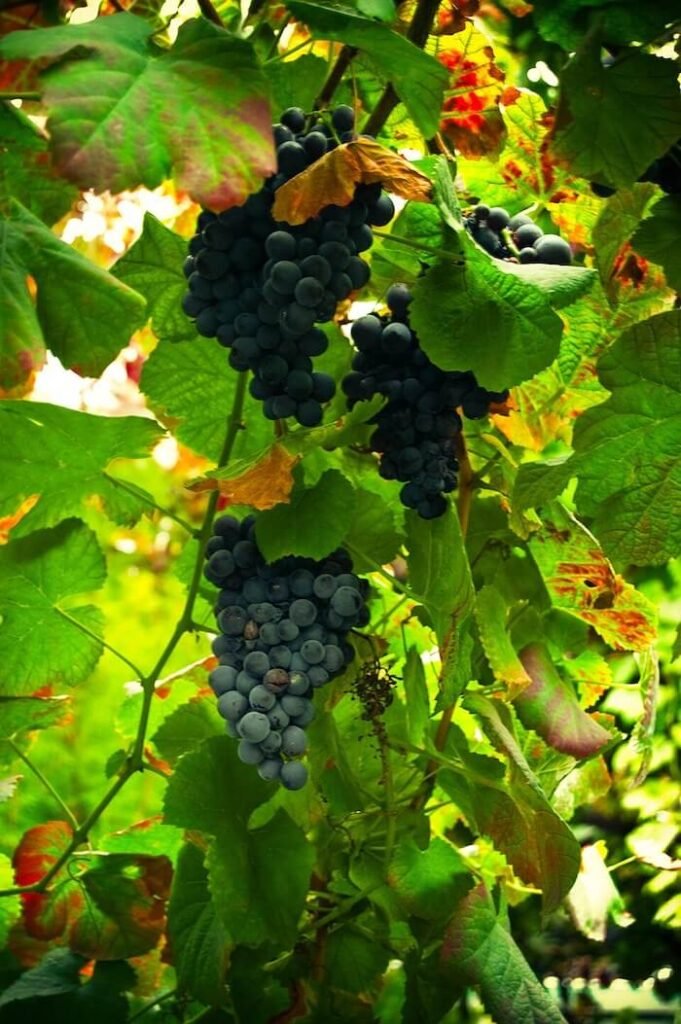
Red Vinho Verde is far less common internationally, but it’s a traditional local style. The DOC recommends varieties like Amaral, Azal Tinto, Borraçal, Brancelho, Espadeiro, Padeiro, Pedral, Rabo de Ovelha, and Vinhão.
The standout is Vinhão—the most planted red grape in the region. It produces deeply coloured wines that are typically low alcohol but surprisingly structured, with herbal, peppery aromas and a rustic edge locals love.
Rosado (rosé) Vinho Verde grapes
Rosé (often labelled Rosado) Vinho Verde is usually made from grapes such as Espadeiro, Padeiro, Vinhão, and sometimes Touriga Nacional. Because these grapes are naturally highly pigmented, rosado Vinho Verde often has a deeper pink colour than many lighter Provence-style rosés—while still keeping that signature Vinho Verde brightness and freshness.
How Vinho Verde compares to other wines
Here’s a handy table with some common comparisons:
| Wine | Sweetness | Bubbles | Acidity | Alcohol | Best for |
| Vinho Verde wine | Usually dry | Often light effervescence | High acidity | Low alcohol | Seafood, sunny terraces, petiscos |
| Sauvignon Blanc | Dry | No | High | Medium | Aromatic whites, salads, goat cheese |
| Pinot Grigio | Dry | No | Medium | Medium | Light meals, simple sipping |
| Prosecco | Dry to off-dry | Yes | Medium | Medium | Aperitif, celebrations |
| Albariño (Spain) | Dry | No | High | Medium | Seafood and coastal dishes |
If you like Sauvignon Blanc or Albariño, there’s a very good chance you’ll love Vinho Verde—especially the aromatic Loureiro and structured Alvarinho styles.
Drink Like a Local on our Award-Winning Food Tour
Vinho Verde is one of those wines that makes perfect sense once you taste it the way locals do: chilled, shared, and paired with the right bites.
On our Lisbon Food Tour, we’ll guide you through classic Lisbon flavours and show you exactly why Vinho Verde wine is one of Portugal’s most refreshing icons. You’ll get to taste it alongside the kinds of dishes it was made for—think seafood, salty snacks, and traditional petiscos—and learn how to spot the differences between styles like Alvarinho and Loureiro. But that’s not all! You’ll also enjoy priority service at every food stop, the insider insight of a local foodie guide, and the best pastel de nata in Lisbon.
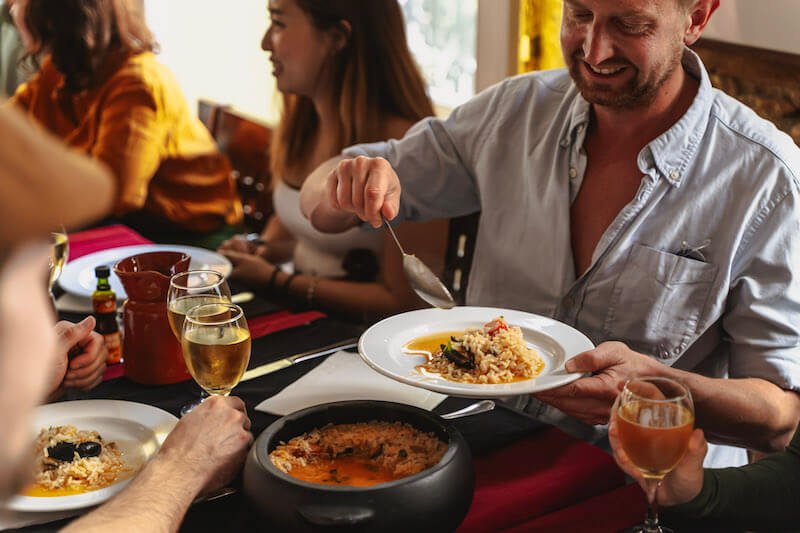
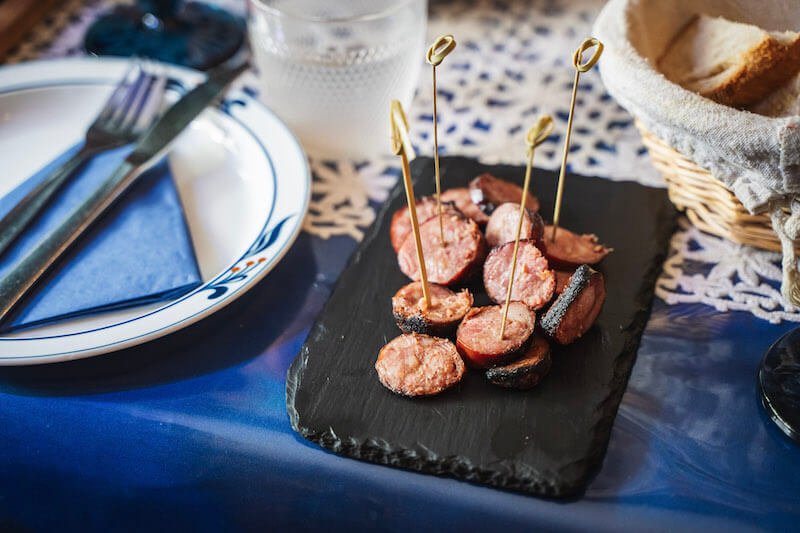
If you want a fun, delicious introduction to Portuguese food culture (with zero guesswork), book now, come hungry—and let’s drink and eat Lisbon the right way.
➡️ Secure your spot on our award-winning Lisbon Food Tour
FAQs
Is Vinho Verde green?
No. “Green wine” refers to the wine’s youthful style, and not to its colour.
Is Vinho Verde sweet or dry?
Most Vinho Verde is dry, though some inexpensive bottles may taste slightly off-dry. Look for single-varietal wines (like Alvarinho or Loureiro) if you want a reliably dry style.
Is Vinho Verde sparkling?
Vinho Verde isn’t fully sparkling, but many have a gentle spritz or light effervescence.
What’s the alcohol content of Vinho Verde?
At around 9%–12% ABV, Vinho Verde is a low-alcohol wine.
What does Vinho Verde taste like?
Crisp citrus, green apple, floral notes, and tons of freshness, with high acidity and sometimes a subtle spritz.
What food pairs best with Vinho Verde?
It’s one of Portugal’s best wines for a seafood pairing, but it also works beautifully with cheeses, salads, and petiscos. Order it at any traditional restaurant in Lisbon and really treat your tastebuds.
Where is Vinho Verde made?
It comes from the Vinho Verde DOC in northern Portugal, strongly influenced by the Atlantic climate, especially around the Minho region.